Old Pipes Under Ipiranga: What Materials Mean for Clogs
The pipes beneath an older Ipiranga building are older than most of its residents and have their own story. If you live in one of these properties, the material of your drain lines quietly decides how often you will face clogs, what kind of repair makes sense, and when replacement is the only honest answer. For urgent blockages, a desentupidora Itaim Bibi São Paulo SP can clear the line, but understanding the pipe itself helps you ask better questions before anyone arrives.
This is not a generic list of clog causes. It is a materials-reading exercise: what the pipes are made of, how each material fails, and how to weigh repair against replacement when the building has decades behind it.
Why older Ipiranga buildings hide pipe problems
Ipiranga grew in waves, and each wave left behind a different set of construction habits. Buildings from the mid-twentieth century often used materials that were standard at the time but behave very differently from modern PVC. The result is that two apartments on the same street can have completely different plumbing profiles.
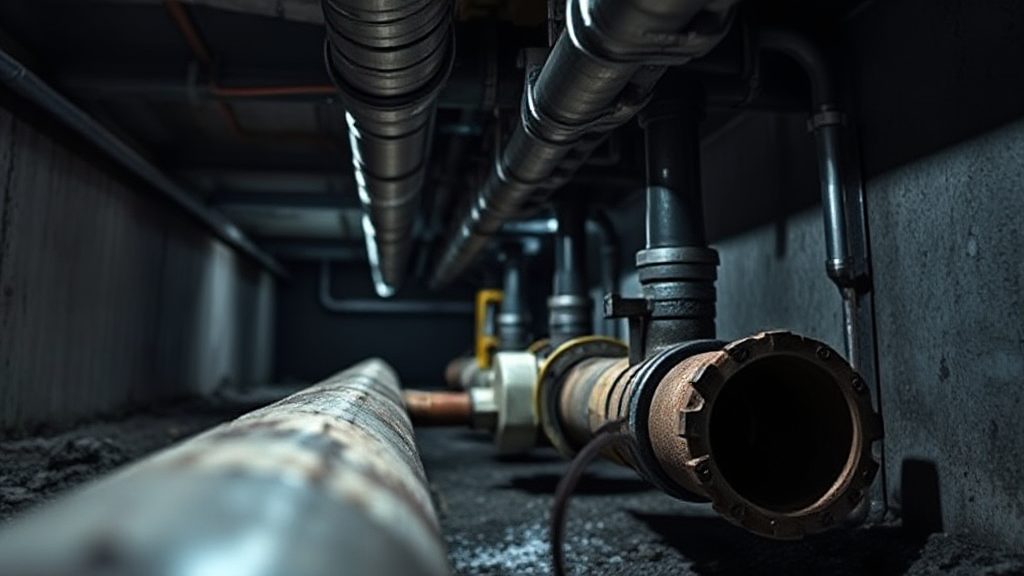
Older pipes age quietly. A cast-iron line may look fine from the outside while its inner wall has roughened into a surface that catches grease and paper. A galvanized steel branch may narrow year by year as corrosion builds up. By the time water backs up, the problem has usually been developing for a long time.
The signs that point to the pipe, not the drain
Recurring clogs in the same fixture, gurgling sounds from other drains when one is used, and slow drainage that returns within weeks of a cleaning are all clues that the pipe itself is the issue. If a plunger or a simple snake fixes the problem for a few days and then it comes back, the obstruction is likely structural rather than a one-time blockage.
Smells are another signal. A persistent sewer odor in a bathroom or kitchen often means the trap or the branch line is holding waste against a rough interior wall. That is a materials symptom, not just a hygiene problem.
Common older pipe materials and how they behave
Three materials dominate the older housing stock in this part of São Paulo: cast iron, galvanized steel, and lead or early bituminous lines. Each one fails in its own way, and each one changes the cost and method of clearing a clog.
Cast iron
Cast iron was the workhorse for soil and waste lines. It is strong, but its interior corrodes over decades into a rough, pitted surface. Grease, hair, and soap scum cling to that texture, and the effective diameter of the pipe shrinks. Cast iron can also crack at joints or sag between supports, creating low points where waste collects.
Galvanized steel
Galvanized steel was common for supply lines and sometimes for drains. Its zinc coating wears away, and rust builds up inside. A galvanized drain that once had a wide bore can end up with a narrow, irregular channel. Snaking helps temporarily, but the rust returns and the pipe becomes brittle.
Lead and early bituminous lines
Older properties may still have lead bends or bituminous fiber pipes in branches. Lead deforms and can sag; bituminous lines become brittle and crack. Both are fragile under mechanical cleaning, so a technician needs to identify them before choosing a tool.
| Material | Typical failure | Clearing risk |
|---|---|---|
| Cast iron | Internal corrosion, joint cracks | Moderate; rough walls re-clog |
| Galvanized steel | Rust narrowing, brittleness | High; pipe can split |
| Lead / bituminous | Sagging, cracking | High; avoid aggressive cutting |
How each material fails and what it means for clearing a clog
The method used to clear a line should match the material. A high-pressure jet that is safe in modern PVC can damage a brittle bituminous branch or a thin galvanized line. Conversely, a gentle snake may not remove the hardened scale inside a cast-iron stack.
A desentupidora Itaim Bibi technician will usually inspect the line, ask about the building’s age, and choose between mechanical clearing, hydro-jetting, or a camera inspection. The camera is often the turning point: it shows whether the obstruction is a localized clog or a pipe that has lost most of its bore.
When the clog is a symptom, not the cause
If the camera shows a collapsed section, a separated joint, or roots entering through a crack, clearing the clog only buys time. The next step is a repair decision. That is where the repair-versus-replace question becomes unavoidable.
For buildings with shared stacks, the decision also involves the condominium. A branch line inside one apartment may be the owner’s responsibility, while the main stack is common property. Knowing which pipe is which prevents expensive misunderstandings.
Repair or replace: how to decide with your technician
Repair makes sense when the damage is localized: a short cracked section, a failed joint, or a single branch line that can be replaced without opening the whole system. Replacement makes sense when the pipe has lost its bore, when multiple sections are failing, or when the material is one that cannot be reliably cleaned.
Cost is only part of the trade-off. A repair that restores flow for a year may be the right choice if a full replacement would require opening floors or disrupting a commercial tenant. A replacement is often the better long-term decision when the same line has been cleared repeatedly and the camera shows widespread deterioration.
Questions to ask before work begins
- What material is this pipe, and how was it identified?
- Can we see the inside of the line with a camera before choosing a method?
- Is the clog localized, or is the pipe itself narrowed or damaged?
- Which parts of the line are my responsibility and which belong to the condominium?
- If we clear it today, what is the realistic time before it clogs again?
- Would hydro-jetting be safe in this material, or is mechanical clearing safer?
These questions turn a emergency call into a informed decision. They also help you compare quotes fairly, because two companies may be proposing different methods for the same pipe.
If you need a second opinion or a scheduled inspection, a desentupidora em Itaim Bibi São Paulo SP can assess the line and explain the options in plain terms. The goal is not to sell a replacement on the first visit, but to understand what the material can still handle.
Older pipes are not automatically failing pipes. Many cast-iron stacks serve buildings for generations when they are maintained and cleared with the right tools. The key is to read the material honestly: know what it is, watch how it fails, and decide repair or replacement based on evidence rather than on the urgency of the last backup.
Reply